Chain Sprocket Replacement Cost Pune 2026: ₹1,000 Onwards
BF
BikeFix Pune Team
Certified Bike Mechanic
Share:
BikeFix Pune Team
Certified Bike Mechanic
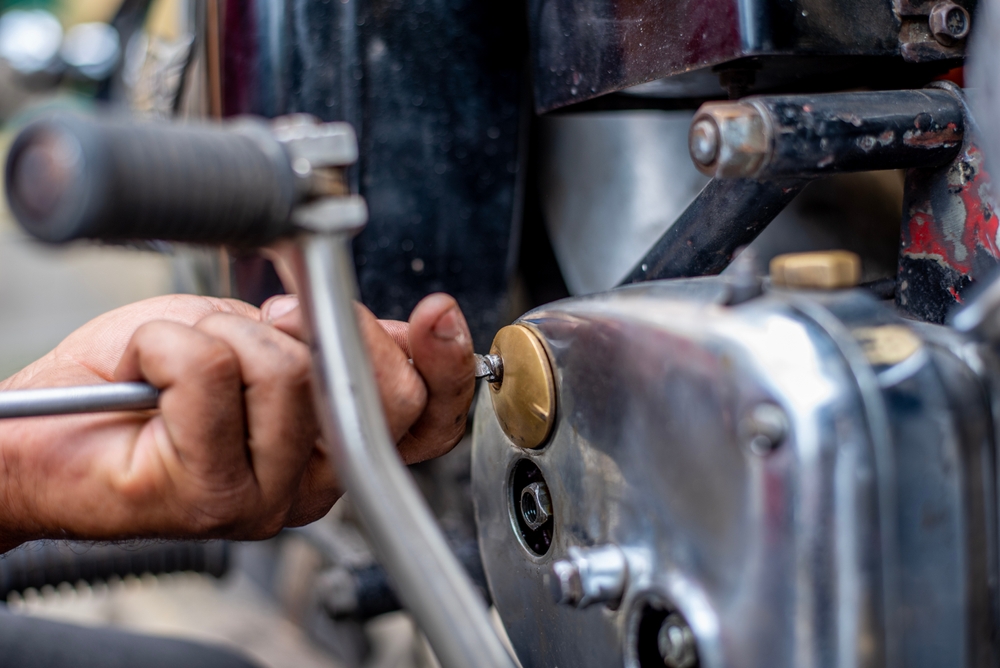
If there is one replacement cost question that appears in every single brand-specific service guide we have published — from Hero and Honda to Royal Enfield to KTM — it is the chain and sprocket set. No other wear-and-tear component generates as much confusion about pricing, timing, and brand selection. Riders want to know whether to choose standard or O-ring, whether Rolon is good enough or RK is worth the premium, and whether replacing just the chain without the sprockets is a smart cost-saving move or a false economy. This guide answers all of those questions with Pune-specific pricing for 2026.
Pune’s riding conditions are particularly harsh on chain and sprocket sets. The city’s ongoing infrastructure expansion has left construction dust hanging over corridors like Hinjewadi, Wakad, and Balewadi, where fine particles settle on exposed chains and act as abrasive compounds that accelerate wear with every rotation. Add the monsoon months from June to September — when standing water, mud, and humidity attack unprotected metal — and the heavy stop-and-go traffic across arterial roads, and you have conditions that can cut chain life by 30-40% compared to highway riding.
This guide covers chain sprocket replacement costs for every major bike brand in Pune, breaks down the differences between chain types and brands, explains exactly when replacement is needed, and offers practical maintenance advice to extend chain life in Pune’s demanding conditions. Whether you ride a Hero Splendor through daily commute traffic or push a KTM Duke 390 through weekend rides, you will find the exact pricing and recommendations you need below.
Before diving into brand-specific details, here is a quick summary of what chain sprocket replacement costs in Pune across different bike categories.
| Bike Category | Chain Type | Kit Cost (Chain + Sprockets) | With Installation |
|---|---|---|---|
| Commuter (100-125cc) | Standard | ₹550-₹1,499 | ₹1,000-₹1,300 |
| Commuter (100-125cc) | O-ring | ₹1,499-₹1,200 | ₹1,200-₹1,500 |
| Executive (150-160cc) | Standard | ₹1,499-₹1,500 | ₹1,800-₹2,200 |
| Executive (150-160cc) | O-ring | ₹1,400-₹2,100 | ₹2,200-₹3,000 |
| Premium (200-350cc) | O-ring | ₹2,100-₹3,000 | ₹3,000-₹4,500 |
| Performance (300cc+) | O-ring/X-ring | ₹2,500-₹4,500 | ₹3,500-₹5,500 |
| Premium (RE 650, KTM 390) | DID/RK Premium | ₹3,000-₹5,000 | ₹4,000-₹6,500 |
Kit cost includes chain, front sprocket, and rear sprocket. Installation includes labor, old chain removal, wheel alignment, and tension adjustment. Prices valid for Pune and PCMC as of March 2026.
What is included in the installation cost? The labor charge of ₹300-₹450 covers removal of the old chain and sprockets, fitting the new set, rear wheel alignment using alignment tools, chain tension adjustment to manufacturer specifications, lubrication of the new chain, and a short test ride to verify smooth operation. BikeFix provides this as a doorstep service — the mechanic arrives at your location with all necessary tools including chain breaker, rivet tool, and torque wrench.
Hero bikes dominate Pune’s commuter segment, and their chain sprocket sets are among the most affordable to replace.
| Model | Chain Size | OEM Kit Cost | Aftermarket Kit | With Installation |
|---|---|---|---|---|
| Splendor Plus/iSmart | 428H | ₹750-₹1,499 | ₹630-₹857 | ₹1,000-₹1,300 |
| HF Deluxe | 428H | ₹700-₹1,499 | ₹580-₹1,499 | ₹1,000-₹1,250 |
| Passion Pro/Plus | 428H | ₹750-₹1,499 | ₹630-₹860 | ₹1,000-₹1,300 |
| Glamour 125 | 428H | ₹1,499-₹1,050 | ₹680-₹1,499 | ₹1,100-₹1,400 |
| Xtreme 160R | 428H | ₹1,000-₹1,400 | ₹1,499-₹1,200 | ₹1,400-₹1,800 |
Hero Splendor is the most common bike on Pune roads, and its chain sprocket set is one of the cheapest to replace. The standard 428H chain used across Hero’s commuter range is widely available from every aftermarket brand. Most Hero owners in Pune opt for a Rolon standard chain set, which offers reliable performance at the lowest price point. For riders covering long daily distances — common for those commuting from Hinjewadi to Pune city — an O-ring upgrade (₹1,200-₹1,500 with installation) significantly extends chain life and reduces maintenance frequency.
Honda bikes use high-quality OEM chain sets, and their replacement parts are moderately priced.
| Model | Chain Size | OEM Kit Cost | Aftermarket Kit | With Installation |
|---|---|---|---|---|
| Shine 125 | 428H | ₹750-₹1,000 | ₹542-₹838 | ₹1,000-₹1,400 |
| SP125 | 428H | ₹1,499-₹1,100 | ₹600-₹1,499 | ₹1,000-₹1,400 |
| Unicorn 160 | 428H | ₹1,000-₹1,400 | ₹1,499-₹1,100 | ₹1,400-₹1,800 |
| CB Hornet 160R | 428H | ₹1,100-₹1,500 | ₹1,499-₹1,200 | ₹1,500-₹1,900 |
| CB200X | 428H | ₹1,300-₹1,700 | ₹1,050-₹1,400 | ₹1,800-₹2,200 |
| CB350 (H’ness/RS) | 520 | ₹2,200-₹3,000 | ₹1,800-₹2,500 | ₹3,000-₹4,000 |
Honda’s factory chains generally last longer than comparable Hero or Bajaj chains because Honda uses tighter manufacturing tolerances. The Honda Shine and Unicorn use the same 428H chain size, making aftermarket options widely available and affordable. The CB350 is Honda’s premium offering and uses a heavier 520-size chain — replacement costs are noticeably higher, but the chain lasts proportionally longer. For Honda bike owners in Kothrud and Hadapsar, where daily commutes involve both city traffic and highway stretches, upgrading to an O-ring chain is worth the additional ₹999-₹600.
Bajaj offers a wide range from budget commuters to the performance-oriented Dominar, and chain sprocket costs reflect this spread.
| Model | Chain Size | OEM Kit Cost | Aftermarket Kit | With Installation |
|---|---|---|---|---|
| Platina/CT | 428H | ₹700-₹1,499 | ₹550-₹1,499 | ₹1,000-₹1,300 |
| Pulsar 125/150 | 428H | ₹1,100-₹1,500 | ₹1,499-₹1,200 | ₹1,800-₹2,200 |
| Pulsar NS160 | 428H | ₹1,200-₹1,500 | ₹1,499-₹1,250 | ₹1,800-₹2,300 |
| Pulsar NS200 | 520 O-ring | ₹1,800-₹2,500 | ₹1,500-₹2,100 | ₹2,500-₹3,000 |
| Pulsar RS200 | 520 O-ring | ₹1,900-₹2,600 | ₹1,600-₹2,200 | ₹2,600-₹3,200 |
| Dominar 250/400 | 520 O-ring | ₹2,200-₹3,200 | ₹1,800-₹2,700 | ₹3,000-₹4,000 |
The Bajaj Pulsar 150 is one of the most popular bikes in Pune and uses a standard 428H chain. However, the Pulsar 150’s chain tends to stretch faster than comparable 150cc bikes because of the engine’s torque characteristics — riders in heavy traffic areas like Sinhagad Road and Karve Road report chain adjustment every 2,000-3,000 km. The NS200 and Dominar come factory-fitted with O-ring chains and the heavier 520 size, so replacement costs are significantly higher. Always replace the Dominar’s chain with an O-ring or X-ring chain — a standard chain cannot handle the torque output and will fail prematurely.
TVS bikes use well-engineered chain drive systems, and the Apache RTR series in particular benefits from quality OEM chains.
| Model | Chain Size | OEM Kit Cost | Aftermarket Kit | With Installation |
|---|---|---|---|---|
| Star City Plus | 428H | ₹700-₹1,499 | ₹550-₹1,499 | ₹1,000-₹1,300 |
| Raider 125 | 428H | ₹750-₹1,050 | ₹600-₹1,499 | ₹1,000-₹1,400 |
| Apache RTR 160 | 428H | ₹1,100-₹1,400 | ₹1,499-₹1,200 | ₹1,800-₹2,200 |
| Apache RTR 200 4V | 520 O-ring | ₹1,700-₹2,400 | ₹1,400-₹2,000 | ₹2,200-₹3,000 |
| Apache RR 310 | 520 O-ring | ₹2,500-₹3,500 | ₹2,100-₹3,000 | ₹3,500-₹4,500 |
The TVS Apache RTR 160 is a strong seller in Pune and its 428H chain is a straightforward replacement. The Apache RTR 200 4V steps up to a 520 O-ring chain from the factory, which lasts considerably longer but costs nearly double to replace. TVS Raider owners should note that despite being a 125cc bike, the Raider’s aggressive riding style (especially in Pune’s traffic) puts more stress on the chain than a typical commuter — budget for replacement at around 18,000-22,000 km rather than the 25,000 km that TVS suggests.
Royal Enfield chain sprocket replacement costs are among the highest in the non-performance segment due to heavier chain sizes and larger sprockets.
| Model | Chain Size | OEM Kit Cost | Aftermarket Kit | With Installation |
|---|---|---|---|---|
| Classic 350 (new) | 520 O-ring | ₹2,500-₹3,200 | ₹2,100-₹2,700 | ₹3,000-₹4,000 |
| Bullet 350 | 520 | ₹2,200-₹2,900 | ₹1,800-₹2,400 | ₹3,000-₹3,800 |
| Meteor 350 | 520 O-ring | ₹2,500-₹3,200 | ₹2,100-₹2,800 | ₹3,000-₹4,000 |
| Hunter 350 | 520 O-ring | ₹2,300-₹3,000 | ₹1,900-₹2,500 | ₹3,000-₹3,800 |
| Interceptor 650 | 520 O-ring | ₹3,200-₹4,500 | ₹2,800-₹3,800 | ₹3,800-₹5,500 |
| Continental GT 650 | 520 O-ring | ₹3,200-₹4,700 | ₹2,800-₹4,000 | ₹3,800-₹5,800 |
Royal Enfield is Pune’s most popular premium brand, and the Classic 350 and Bullet 350 are everywhere from Koregaon Park to Wakad. The new J-series Classic 350 and Meteor 350 use a 520 O-ring chain as standard, which lasts longer than the older models’ non-sealed chains. The Interceptor 650 and Continental GT 650 use a heavier-duty 520 O-ring chain with larger sprockets — replacement is more expensive but the 650cc twins’ chains typically last 25,000-35,000 km with proper maintenance. For Royal Enfield owners, RK chains are the most popular aftermarket upgrade — they offer better longevity than OEM at comparable or lower prices. Read our detailed Royal Enfield service cost guide for complete maintenance pricing.
KTM bikes use high-specification chain drive systems, and replacement costs reflect the premium positioning.
| Model | Chain Size | OEM Kit Cost | Aftermarket Kit | With Installation |
|---|---|---|---|---|
| Duke 125 | 428 O-ring | ₹1,600-₹2,200 | ₹1,300-₹1,800 | ₹2,000-₹2,800 |
| Duke 200 | 520 O-ring | ₹2,400-₹3,200 | ₹2,000-₹2,700 | ₹3,000-₹4,000 |
| RC 200 | 520 O-ring | ₹2,500-₹3,400 | ₹2,100-₹2,900 | ₹3,000-₹4,200 |
| Duke 250 | 520 O-ring | ₹2,700-₹3,600 | ₹2,300-₹3,021 | ₹3,200-₹4,500 |
| Duke 390 | 520 X-ring | ₹3,200-₹4,500 | ₹2,700-₹3,800 | ₹3,800-₹5,500 |
| RC 390 | 520 X-ring | ₹3,500-₹4,800 | ₹2,900-₹4,200 | ₹4,000-₹6,000 |
KTM’s chain sprocket sets are expensive relative to engine capacity because KTM uses high-specification chains and hardened sprockets designed for their high-revving engines. The Duke 390 and RC 390 use X-ring chains as standard — downgrading to a standard chain is not recommended as it cannot handle the power output and aggressive riding these bikes encourage. DID chains are the gold standard for KTM replacements, though RK offers a more affordable alternative that KTM owners find acceptable. KTM’s chains tend to wear faster in Pune conditions because of the aggressive acceleration patterns these bikes encourage in stop-and-go traffic. See our complete KTM service cost breakdown for all maintenance pricing.
Yamaha uses quality OEM chains, and their aftermarket replacement options are well-established.
| Model | Chain Size | OEM Kit Cost | Aftermarket Kit | With Installation |
|---|---|---|---|---|
| FZ-S FI V4 | 428H | ₹1,100-₹1,500 | ₹1,499-₹1,200 | ₹1,800-₹2,200 |
| FZS 25 / FZ 25 | 428H | ₹1,300-₹1,800 | ₹1,050-₹1,400 | ₹2,000-₹2,800 |
| MT-15 V2 | 428H | ₹1,300-₹1,800 | ₹1,050-₹1,500 | ₹1,800-₹2,500 |
| R15 V4 | 428 O-ring | ₹1,800-₹2,500 | ₹1,500-₹2,089 | ₹2,500-₹3,200 |
| R15M | 428 O-ring | ₹1,900-₹2,600 | ₹1,600-₹2,200 | ₹2,600-₹3,500 |
Yamaha’s FZ series uses a standard 428H chain that is inexpensive and widely available. The R15 V4 and R15M use a factory O-ring chain that lasts significantly longer — most R15 owners report 25,000-30,000 km before needing replacement. The FZ25 shares its 428H chain size with smaller Yamaha models, keeping replacement costs moderate despite the larger engine. Yamaha owners in Pune should consider an O-ring upgrade for the FZ and MT-15 — the ₹999-₹600 premium over a standard chain pays for itself in longer life and less frequent general servicing visits. Check our Yamaha service cost guide for the full maintenance picture.
Suzuki’s chain sprocket replacement costs are moderate, positioned between commuter and premium pricing.
| Model | Chain Size | OEM Kit Cost | Aftermarket Kit | With Installation |
|---|---|---|---|---|
| Gixxer 150 | 428H | ₹1,100-₹1,400 | ₹1,499-₹1,200 | ₹1,800-₹2,200 |
| Gixxer SF 150 | 428H | ₹1,200-₹1,500 | ₹1,499-₹1,250 | ₹1,800-₹2,300 |
| Gixxer 250 | 520 O-ring | ₹2,100-₹2,900 | ₹1,700-₹2,400 | ₹3,000-₹3,800 |
| Gixxer SF 250 | 520 O-ring | ₹2,200-₹3,000 | ₹1,800-₹2,500 | ₹3,000-₹4,000 |
The Suzuki Gixxer 150 is a popular choice in Pune and uses the same 428H chain as most 150cc bikes. The Gixxer 250 and SF 250 step up to a 520 O-ring chain, which adds to replacement cost but provides better durability for the 250cc engine’s output. Suzuki OEM chains are well-regarded for quality, but Rolon and RK aftermarket options offer equivalent performance at 15-20% lower cost. For detailed Suzuki maintenance costs, see our Suzuki bike service guide.
Choosing the right chain type is as important as choosing the right brand. Here is a detailed comparison of the three chain types available in India.
| Feature | Standard (Non-Sealed) | O-Ring | X-Ring |
|---|---|---|---|
| Construction | Basic roller chain, no sealing | Rubber O-rings between plates | X-shaped rubber seals between plates |
| Internal Lubrication | None (relies on external lube) | Factory grease sealed inside | Factory grease sealed inside |
| Price Range (chain only) | ₹350-₹1,499 | ₹1,499-₹3,000 | ₹2,000-₹5,000 |
| Lifespan | 15,000-20,000 km | 25,000-35,000 km | 30,000-40,000 km |
| Lubrication Frequency | Every 300-500 km | Every 800-1,000 km | Every 1,000-1,500 km |
| Friction/Power Loss | Lowest when freshly lubed | Slightly higher due to O-ring drag | Lower than O-ring (X-shape reduces contact) |
| Dust Resistance | Poor (exposed bushings) | Good (sealed) | Excellent (sealed) |
| Monsoon Performance | Poor (rusts quickly) | Good (sealed internals) | Excellent (sealed internals) |
| Best For | Budget commuters, short commutes | Most bikes, daily riders | Performance bikes, touring |
| Recommended Bikes | Splendor, Platina, HF Deluxe | Pulsar, Apache, FZ, Classic 350 | Duke 390, R15, Interceptor 650 |
For Pune riders, the chain type decision depends on your bike and riding pattern:
Standard chains make sense only for budget commuter bikes (Hero Splendor, Bajaj Platina) ridden short distances (under 15 km daily) in relatively clean areas. If you commute through dusty construction corridors or ride during monsoon, even on a commuter bike, the O-ring upgrade is worth the extra cost.
O-ring chains are the sweet spot for most Pune riders. The sealed design keeps Pune’s construction dust and monsoon water away from the critical bushing surfaces. The longer lubrication intervals mean fewer maintenance stops. For bikes from 125cc to 350cc — which covers everything from the Honda Shine to the Royal Enfield Classic 350 — O-ring chains offer the best value over their lifetime.
X-ring chains are justified for performance bikes (KTM Duke 390, Yamaha R15, Royal Enfield Interceptor 650) where reduced friction translates to measurable power delivery improvement. The price premium over O-ring is 30-50%, but the longevity gain is only 10-15% — so X-ring is primarily about performance, not value.
Not all chain brands are equal. Here is how the major brands available in Pune compare across key parameters.
| Brand | Origin | Price Range (Complete Kit) | Best For | Lifespan Rating | Availability in Pune |
|---|---|---|---|---|---|
| Rolon | India | ₹630-₹2,300 | Commuter bikes | Good (3.5/5) | Excellent — widely stocked |
| RK | Japan | ₹1,400-₹3,800 | Mid-range to premium | Very Good (4/5) | Good — most bike shops |
| DID | Japan | ₹2,500-₹6,000 | Performance and premium | Excellent (5/5) | Moderate — specialist shops |
| JT Sprockets | UK | ₹500-₹1,800 (sprockets only) | All bikes (sprockets) | Very Good (4/5) | Good |
| OEM (various) | Various | ₹700-₹4,500 | Original replacement | Good (3.5/5) | At brand service centers |
Rolon is India’s largest motorcycle chain manufacturer and produces chains for several OEM brands. Their standard chains are reliable, affordable, and available at every bike accessories shop in Pune. For commuter bikes like Hero Splendor, Honda Shine, and Bajaj Pulsar 150, Rolon chains deliver dependable performance without premium pricing. Rolon also offers O-ring chains in the ₹1,499-₹1,500 range — these are the most affordable sealed chains available and provide a noticeable durability improvement over standard chains.
RK is a Japanese chain manufacturer with an excellent reputation in India. Their chains use higher-grade steel and tighter manufacturing tolerances than budget brands, resulting in less stretch and longer service life. RK chains are particularly popular among Royal Enfield and Bajaj NS owners in Pune. The RK 520SO O-ring chain is a common upgrade for Classic 350 owners — it typically outlasts the OEM chain by 20-30% and costs about the same as genuine Royal Enfield replacement. For riders looking for better-than-OEM quality without DID pricing, RK is the go-to choice.
DID (Daido) is the benchmark for motorcycle chain quality worldwide. Their chains are used as OEM on many Japanese and European bikes, and their aftermarket chains are considered the best available. DID chains cost 2-3 times more than Rolon equivalents but deliver significantly longer life, less stretch, and smoother operation. For KTM Duke/RC owners, Yamaha R15 riders, and Royal Enfield 650 twin owners, DID chains are worth the investment — the reduced replacement frequency offsets the higher upfront cost over a 3-4 year ownership period.
JT Sprockets from the UK specializes in high-quality sprockets made from hardened chromoly steel. Their sprockets resist wear better than most OEM sprockets and are available for virtually every bike model sold in India. A popular combination in Pune is a Rolon or RK chain paired with JT sprockets — this gives you premium sprocket quality with a more affordable chain, and the total kit cost sits between budget and premium options.
Knowing when to replace your chain and sprockets prevents dangerous failures and saves money by avoiding cascading damage. Here are the eight definitive signs, with specific guidance for Pune riding conditions.
Every bike has a rear axle adjustment mechanism that compensates for chain stretch as the chain wears. When the rear axle reaches the end of its adjustment slots — meaning you cannot tighten the chain any further — replacement is mandatory. This is the most common trigger for replacement and typically happens at 15,000-25,000 km depending on chain type and maintenance.
Even after adjusting chain tension to the recommended 20-25mm of slack (check your owner’s manual for the exact specification), the chain sags excessively or has uneven tension at different points around its rotation. This indicates severe stretch and internal wear that adjustment cannot correct.
New sprocket teeth are symmetrical — roughly the same shape on both sides. Worn sprockets develop a distinctive hooked or shark-fin profile where the drive side of each tooth is worn down while the trailing side remains tall. Visually inspect both the front (engine) sprocket and rear (wheel) sprocket. If teeth look like breaking waves rather than triangles, replacement is overdue.
A properly lubricated chain in good condition runs nearly silently. If your chain produces persistent clanking, grinding, or rattling noises even after fresh lubrication, it indicates worn rollers, elongated pins, or poor chain-to-sprocket meshing — all signs of a chain past its service life. This is particularly noticeable when decelerating in gear, as the chain transitions from tension to slack side.
Inspect the chain by slowly rolling the bike and watching the chain pass over the rear sprocket. Individual links that do not flex smoothly — they appear stiff or “kinked” — indicate internal corrosion or worn bushings. Stiff links cause the chain to jump or bind on the sprocket teeth, accelerating wear on both components. In Pune’s humid monsoon conditions, stiff links often develop from water ingress into standard (non-sealed) chains.
If the chain skips or jumps on the sprocket during hard acceleration, this is a safety-critical sign that immediate replacement is needed. This typically means the chain has stretched to the point where it no longer meshes with the sprocket teeth properly, or the sprocket teeth are so worn they cannot hold the chain. Do not ride with a skipping chain — it can derail completely and lock the rear wheel.
Inspect the chain for rust on rollers and side plates, missing or cracked rollers, and visible corrosion on sprocket teeth. Rust weakens the chain’s structural integrity and increases friction dramatically. After Pune’s monsoon season, this is the most common reason for premature chain replacement — bikes parked outdoors without covers in areas like Hadapsar and Wanowrie suffer the worst rust damage.
Worn chain and sprockets create backlash — a delay between throttle input and wheel response — that manifests as jerky power delivery. You may notice a slight “clunk” when rolling on or off the throttle, or the bike may feel like it surges and hesitates during steady-speed riding. This jerkiness is often mistaken for engine problems, but it is frequently caused by a worn chain drive that a mechanic can diagnose during a basic inspection.
Pune’s unique combination of climate, terrain, and traffic conditions creates specific challenges for chain and sprocket maintenance. Understanding these factors helps you anticipate replacement timing and choose the right components.
Pune has been India’s most active construction city for the past several years, with metro rail work, highway expansion, and IT park development generating enormous amounts of fine dust. Areas like Hinjewadi, Wakad, Baner, and Kharadi have persistent dust clouds that settle on every exposed bike component. On a chain, this dust mixes with lubricant to form an abrasive paste that grinds away at rollers and sprocket teeth with every rotation. Riders commuting through these areas report chain life reduction of 20-30% compared to cleaner parts of the city.
Pune’s monsoon from June to September brings heavy rainfall that directly impacts chain health. Water washes away chain lubricant, enters the gaps between chain plates and rollers (especially on standard non-sealed chains), and promotes rust. Waterlogged roads — common in low-lying areas of Kothrud, Sinhagad Road, and Hadapsar — submerge the chain in dirty water containing grit and mud. After monsoon, BikeFix mechanics report a significant increase in chain sprocket replacement requests, particularly for bikes with standard chains that were not maintained during the rains.
Pune’s traffic is characterized by constant acceleration and braking, especially on arterial roads like the University Road-FC Road corridor, the Chandni Chowk-Wakad route, and the Hadapsar-Magarpatta stretch. Each acceleration event loads the chain with peak tension, and frequent hard stops create shock loads. This repeated stress cycle fatigues the chain faster than steady-speed riding. A chain that might last 30,000 km in highway riding may last only 18,000-22,000 km in Pune city traffic.
Riders who regularly take the Pune-Mumbai Expressway or travel through Khed Shivapur, Tamhini, and Lavasa ghats put extra stress on their chains due to sustained uphill load. Extended climbing in lower gears at moderate to high RPM keeps the chain under continuous tension at high speed, accelerating wear. Weekend riders who push their bikes through twisties should account for faster chain wear compared to flat-terrain commuters. Royal Enfield and KTM owners who ride to Lonavala or Mahabaleshwar frequently should budget for chain replacement at 20-25% sooner than purely city-riding owners.
Pune’s temperatures range from 12-15°C in December-January nights to 38-42°C in April-May. Cold temperatures thicken chain lubricant, causing momentary dry running during the first few minutes of morning starts — the chain runs partially dry until friction warms the lubricant enough to flow. Summer heat thins lubricant, reducing its protective film and allowing metal-to-metal contact. These temperature swings are less damaging than dust and water individually, but over 12 months they contribute to cumulative stress on chain pins, rollers, and sprocket teeth. Parking in shade and using temperature-stable synthetic chain lubricants can help mitigate these effects.
Many Pune roads, especially in rapidly developing areas like Wagholi, Ravet, and Undri, have uneven surfaces, potholes, and speed breakers that subject the chain to sudden shock loads. When the rear wheel drops into a pothole and rebounds, the chain experiences momentary extreme tension followed by slack — this cycle damages chain pins and bushings faster than smooth-road riding. Riders who regularly navigate poor roads should inspect their chains more frequently and consider the extra durability of O-ring or X-ring chains.
Proper maintenance can extend your chain sprocket life by 30-50%, saving significant money on premature replacements. Here are practical tips tailored for Pune conditions.
For standard chains, lubricate every 500 km in normal conditions and every 300 km during monsoon. For O-ring chains, lubricate every 800-1,000 km normally and every 500 km in monsoon. Always clean the chain before applying fresh lubricant — spraying new lube over dirty chain just seals in the grit. Use a dedicated chain lubricant (Motul Chain Lube, Ipone Chain Lube, or equivalent) — never use engine oil, WD-40, or general-purpose grease.
Cleaning is more important than lubricating. Use a chain cleaning brush and kerosene to remove old lubricant, dust, and grime from the chain. Work the brush into each link, rotate the chain, and wipe clean with a cloth. Only then apply fresh lubricant. Applying new lubricant over a dirty chain is one of the most common mistakes — the fresh lube mixes with the accumulated dust and grit, creating a grinding paste that actually accelerates wear. A proper clean-then-lube cycle takes 15-20 minutes and is the single most effective habit for extending chain life. Chain cleaning kits with brush, cleaner spray, and lubricant are available at most bike accessory shops in Pune for ₹300-₹500.
Chain tension should be checked every 1,000 km and adjusted to the manufacturer’s recommended slack (typically 20-25mm for most bikes). A chain that is too tight accelerates wear on both chain and sprockets and puts unnecessary load on the gearbox output bearing. A chain that is too loose can skip or derail. Chain tension checks are included in every general service at BikeFix.
Incorrect rear wheel alignment after chain adjustment causes the chain to run at an angle, creating uneven wear on the sprocket and accelerating chain stretch on one side. Use the swingarm alignment marks to ensure both sides are equal, or have a mechanic verify alignment with a straightedge tool. Misalignment is a common cause of premature chain failure that is entirely preventable.
If you ride through Pune’s monsoon, take these extra steps: lubricate immediately after riding in rain, do not let water sit on the chain overnight (wipe and lube before parking), and consider a chain guard or mudflap extension to reduce direct water and mud spray. If your bike is parked outdoors, a basic bike cover prevents overnight moisture from settling on the chain.
High-pressure water from a car wash or power washer forces water past the O-ring seals on sealed chains, washing out the factory grease that you cannot replace. If your bike gets a professional wash, ask the mechanic to avoid directing the pressure washer at the chain and sprockets. Clean the chain by hand after washing.
Standard chains can use any motorcycle chain lubricant. O-ring and X-ring chains require lubricant specifically labeled as “O-ring safe” — some aggressive solvents in certain lubricants can degrade the rubber seals, destroying the chain’s sealed design. Check the lubricant label for O-ring compatibility before purchase.
Every time your bike goes for oil change or general service, ask the mechanic to inspect the chain for stretch, sprocket wear, and proper tension. Catching wear early allows you to plan replacement at your convenience rather than dealing with a sudden failure. BikeFix mechanics perform chain inspection as standard during all service visits.
When it comes time to replace your chain and sprockets, you have two options in Pune: visit a workshop or book doorstep service. Here is how they compare.
| Factor | Workshop | Doorstep (BikeFix) |
|---|---|---|
| Convenience | You ride/push bike to shop | Mechanic comes to your location |
| Time Investment | 2-4 hours (travel + wait) | 60-90 minutes at your location |
| Parts Markup | 10-30% over MRP | Transparent pricing, no hidden markup |
| Tool Quality | Varies by workshop | Professional chain breaker and rivet tools |
| Wheel Alignment | Often skipped at budget shops | Included as standard procedure |
| Test Ride | Usually done by mechanic | Done with owner present |
| Warranty | Varies | Standard service warranty |
| Availability | Shop hours only | 7 days a week |
| Travel Cost | Your fuel + time | No extra charge across Pune |
Chain sprocket replacement is one of the services where doorstep service offers the most advantage over workshop visits. Unlike an oil change where you can ride to a shop, a severely worn chain can be dangerous to ride on — the chain could derail or snap, locking the rear wheel mid-traffic. Having a mechanic come to your location eliminates the risk of riding a bike with a failing chain through Pune traffic.
The mechanic brings the correct chain sprocket set for your specific bike model, so there is no risk of wrong sizing — a common problem when riders buy parts themselves and discover a mismatch only after the old chain has been removed. You can observe the entire replacement process, including the wheel alignment step that many budget workshops skip. Proper wheel alignment after chain replacement is critical — misalignment causes uneven chain wear, accelerated sprocket damage, and can make the bike pull to one side during braking.
Another advantage of doorstep service is transparency. At a workshop, you typically hand over the bike and return hours later — you have no way to verify whether the mechanic used the parts you paid for, whether alignment was properly done, or whether the old chain was actually worn enough to need replacement. With doorstep service, you witness everything and can ask questions throughout the process.
BikeFix provides doorstep chain sprocket replacement across all Pune and PCMC areas. The mechanic arrives with the chain sprocket kit matched to your bike, professional tools including chain breaker, rivet tool, and torque wrench, and alignment equipment. No advance payment is required — you pay only after the chain is fitted, tensioned, and test-ridden. Book through WhatsApp or call +91-8668500383.
When getting chain sprocket replacement at a local workshop in Pune, watch out for these common issues:
If your bike came with a standard non-sealed chain, upgrading to an O-ring chain during your next replacement is one of the best investments you can make. Here is the decision framework:
Upgrade to O-ring if:
Stay with standard chain if:
Consider X-ring if:
The cost premium for upgrading from standard to O-ring is typically ₹999-₹1,200 depending on chain size. Over the life of the chain, this pays for itself through longer replacement intervals, fewer lubrication sessions, and less frequent general servicing visits for chain adjustment.
To put chain sprocket costs in perspective, here is what a typical Pune rider spends on chain maintenance over 50,000 km for a mid-range bike (150cc), comparing standard and O-ring chains.
| Cost Component | Standard Chain | O-Ring Chain |
|---|---|---|
| Chain sprocket sets needed | 3 sets (at ~17,000 km each) | 2 sets (at ~28,000 km each) |
| Kit + installation cost | 3 x ₹1,200 = ₹3,600 | 2 x ₹2,200 = ₹4,400 |
| Chain lubricant (bottles) | 10 bottles x ₹200 = ₹2,000 | 5 bottles x ₹250 = ₹1,250 |
| Chain adjustments (shop visits) | 15 x ₹100 = ₹1,500 | 8 x ₹100 = ₹1,499 |
| Total over 50,000 km | ₹7,100 | ₹6,450 |
The O-ring chain is actually cheaper over the long term despite the higher upfront cost per set. And this calculation does not factor in the time saved from fewer maintenance visits and fewer chain replacements — a significant benefit for busy Pune professionals commuting to IT parks in Hinjewadi or corporate offices in Kharadi.
For premium bikes like Royal Enfield Classic 350, the savings from O-ring chains over standard chains are even more dramatic. An RE Classic owner covering 50,000 km in Pune would spend approximately ₹10,500 on standard chain sets and maintenance versus ₹8,500 on O-ring chain sets — a 20% saving alongside significantly less hassle. This is why every BikeFix mechanic recommends O-ring chains for bikes 150cc and above, especially in Pune’s demanding conditions.
For a complete picture of ongoing bike maintenance costs, including oil changes, brake pads, air filters, and more, refer to our comprehensive bike service cost guide and bike maintenance checklist.
The FAQ section at the top of this article covers the most common questions about chain sprocket replacement in Pune. Here are some additional considerations:
Can I change the sprocket ratio for better mileage or performance? Yes, but with trade-offs. Adding teeth to the rear sprocket (e.g., going from 42T to 44T) improves acceleration but reduces top speed and may slightly decrease mileage. Removing teeth from the rear sprocket (e.g., from 42T to 40T) improves cruising efficiency and top speed but reduces low-end acceleration punch. You can also change the front sprocket — adding one tooth to the front has the same effect as removing approximately 3-4 teeth from the rear. Changing sprocket ratios also affects speedometer accuracy on bikes without GPS-based speed displays. For Pune city riding where frequent stops and starts demand strong acceleration, the factory ratio is usually optimal. Consult a mechanic before changing ratios — an incorrect ratio can make the bike unpleasant to ride in traffic.
What tools are needed for chain sprocket replacement? A proper chain sprocket replacement requires a chain breaker tool (to break the old chain), chain rivet tool (to connect the new chain with a rivet-type master link), socket set for sprocket bolts, torque wrench for proper bolt tightening, rear axle spanners, and alignment tools. Budget workshops sometimes skip the rivet tool and use a clip-type master link instead — clip-type links are weaker and can come undone at high speed, posing a serious safety risk. BikeFix mechanics always use rivet-type master links and professional chain tools for reliable, safe installation.
Is chain lube spray better than oil-based lubricant? For Pune conditions, spray lubricant is generally better because it penetrates into the rollers and link gaps before the carrier evaporates, leaving a durable lubricant film. Oil-based lubricants tend to attract more dust. However, spray lubricants cost more per application (₹200-₹999 per can vs ₹80-₹150 for oil). For O-ring chains, always use spray lubricant — oil-based products may contain solvents that damage seals.
How long does doorstep chain sprocket replacement take? A complete chain sprocket replacement at your doorstep takes 60-90 minutes. This includes removing the old chain and sprockets (15-20 minutes), fitting new sprockets and chain (20-30 minutes), rear wheel alignment and chain tensioning (10-15 minutes), and a test ride (5-10 minutes). The process is the same whether you are in Viman Nagar or Pimpri-Chinchwad — BikeFix mechanics carry all required tools.
Does chain sprocket replacement affect bike performance? Absolutely. A worn chain and sprocket set robs your bike of 5-15% power delivery efficiency. When you install a fresh chain sprocket set, you will immediately notice smoother acceleration, quieter operation, and often a slight improvement in fuel efficiency. The improvement is most dramatic if you have been riding with a badly worn chain for a long time — the difference feels like the bike has gained new life. This is also a good time to book a general service to address all maintenance items at once.
If your chain sprocket is due for replacement, BikeFix provides professional doorstep service across all Pune and PCMC areas. Our verified mechanics arrive with the correct chain sprocket set for your bike model, professional-grade tools, and the expertise to ensure proper installation and wheel alignment.
What you get:
Call or WhatsApp +91-8668500383 to book your chain sprocket replacement today. Available 7 days a week across Pune and PCMC.
Looking for other bike services? Check our complete bike service cost guide or bike maintenance checklist for more information. For brake-related costs, see our brake pad replacement cost guide.
All prices mentioned in this guide are indicative and valid as of March 2026. Actual costs may vary slightly based on market conditions, parts availability, and specific bike variant. Contact BikeFix at +91-8668500383 for a precise quote for your bike model.
Our team of certified mechanics brings over 15 years of combined experience in bike service and repair. We're passionate about helping Pune riders keep their bikes in top condition through expert maintenance and reliable doorstep service.
Contact UsChain sprocket replacement in Pune costs ₹1,000-₹6,500 depending on your bike model and chain type. Commuter bikes like Hero Splendor, Honda Shine, and Bajaj Platina cost ₹1,000-₹1,500 for a complete chain sprocket set with doorstep installation. Mid-range bikes like Bajaj Pulsar 150, TVS Apache, and Yamaha FZ cost ₹1,800-₹3,000. Premium bikes like Royal Enfield Classic 350 and Yamaha FZ25 cost ₹3,000-₹4,500. Sports and ADV bikes like KTM Duke 390, Royal Enfield Interceptor 650, and Yamaha R15 cost ₹3,500-₹6,500. These prices include the complete chain sprocket kit (chain + front sprocket + rear sprocket) plus professional installation labor. BikeFix provides doorstep chain sprocket replacement across all Pune and PCMC areas.
A bike chain typically lasts 15,000-30,000 km in Pune conditions, but this varies significantly based on maintenance and riding environment. Pune's dusty construction zones in areas like Hinjewadi, Wakad, Balewadi, and Moshi accelerate chain wear because dust particles act as abrasive compounds. Monsoon riding (June-September) without proper chain lubrication causes rust and accelerated stretch. Heavy stop-and-go traffic in areas like Sinhagad Road, University Road, and FC Road puts extra load on the chain during frequent acceleration. Standard (non-sealed) chains last 15,000-20,000 km, while O-ring or X-ring chains last 25,000-35,000 km with proper maintenance. Regular lubrication every 500 km and periodic adjustment can extend chain life by 30-40%.
Yes, always replace the chain and both sprockets (front and rear) together as a complete set. A new chain on worn sprockets will wear out extremely fast — sometimes within just 2,000-3,000 km — because the worn sprocket teeth don't match the new chain's pitch. Similarly, worn chains accelerate sprocket wear. The sprocket teeth develop a hooked or shark-fin shape when worn, and a new chain cannot mesh properly with these deformed teeth. Replacing as a set ensures proper meshing, smooth power delivery, and maximum component life. The cost difference is minimal — a chain alone costs 60-70% of the full kit, so paying 30-40% more for the complete set is always worth it for longevity and safety.
Standard (non-sealed) chains are basic roller chains without internal sealing. They're cheaper (₹350-₹1,499) but require frequent lubrication (every 300-500 km) and have shorter lifespan (15,000-20,000 km). O-ring chains have small rubber O-rings between the inner and outer plates that seal in factory grease, keeping each link permanently lubricated. They cost more (₹1,499-₹3,000) but last 40-60% longer (25,000-35,000 km) and need less frequent lubrication (every 800-1,000 km). X-ring chains use X-shaped seals for even less friction and slightly better longevity than O-ring. For Pune's dusty roads and monsoon conditions, O-ring chains are strongly recommended — the sealed design keeps dust and water out of the link bushings.
Top chain sprocket brands in India include Rolon (India's largest chain manufacturer, excellent for commuter bikes, ₹630-₹1,500), RK (Japanese brand, premium quality, great for mid-range and premium bikes, ₹1,400-₹3,000), DID (Japanese, considered the gold standard for motorcycle chains, ₹2,500-₹6,000 for high-performance bikes), and JT Sprockets (UK brand, high-quality sprockets that pair well with any chain). OEM chain sprocket sets from your bike manufacturer are always reliable but typically cost 15-25% more than aftermarket equivalents. For Pune commuter bikes, Rolon offers the best value. For Royal Enfield and premium bikes, RK chains provide excellent durability.
Key signs your chain sprocket needs replacement include: chain stretch exceeding 2% (when pulled away from the rear sprocket, you can see daylight under the chain), sprocket teeth appearing hooked or shark-fin shaped instead of symmetrical, chain making excessive noise even after lubrication, chain has reached maximum adjustment (rear axle at end of adjustment slots), visible rust or stiff links that don't flex freely, chain jumping or skipping during acceleration, and power delivery feeling jerky or inconsistent. A simple test: pull the chain away from the rear sprocket — if it lifts more than half a tooth height, replacement is needed.
Yes, BikeFix provides doorstep chain sprocket replacement across all Pune and PCMC areas including Hinjewadi, Wakad, Baner, Kothrud, Hadapsar, Viman Nagar, Kharadi, Aundh, Pimpri-Chinchwad, and 40+ more locations. Our mechanic arrives with the correct chain sprocket set for your bike model, specialized tools (chain breaker, rivet tool, torque wrench), and alignment equipment. The process takes 60-90 minutes: remove old chain and sprockets, install new sprocket set, fit and tension new chain, align rear wheel, and test ride. Service available 7 days a week. No advance payment required.
In Pune's conditions, lubricate your bike chain every 500 km for standard chains and every 800-1,000 km for O-ring/X-ring chains. During monsoon season (June-September), increase frequency to every 300 km as rain washes away lubricant and promotes rust. After riding through waterlogged areas (common in Hadapsar, Sinhagad Road, and low-lying parts of Kothrud during heavy rain), lubricate immediately after drying the chain. Use dedicated chain lubricant — never use engine oil, WD-40, or grease as they either attract dust or damage O-ring seals. Clean the chain with a brush and kerosene before applying fresh lubricant for best results.
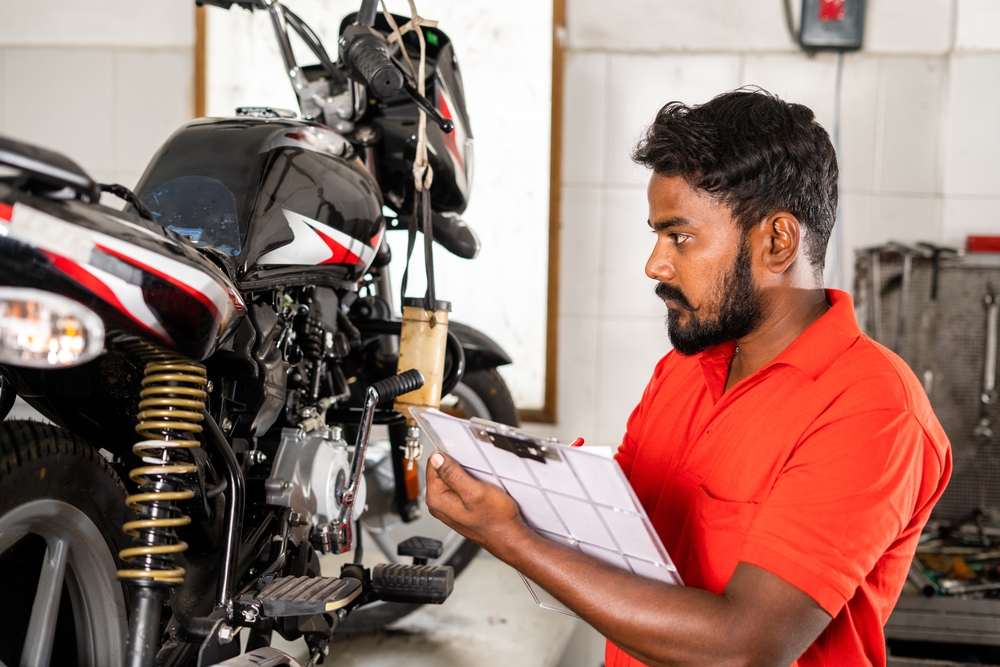
Bajaj service cost from ₹999 — Pulsar 125/150, NS200, Dominar. Service schedule: 1st at 500-750 km, 2nd at 5,000 km, then every 5,000 km. Oil change ₹999.
Bajaj Pulsar service cost from ₹999 — 125, 150, N160, NS200, N250. Service schedule: 1st at 500-750 km, 2nd at 5,000 km, then every 5,000 km. Oil change ₹999.
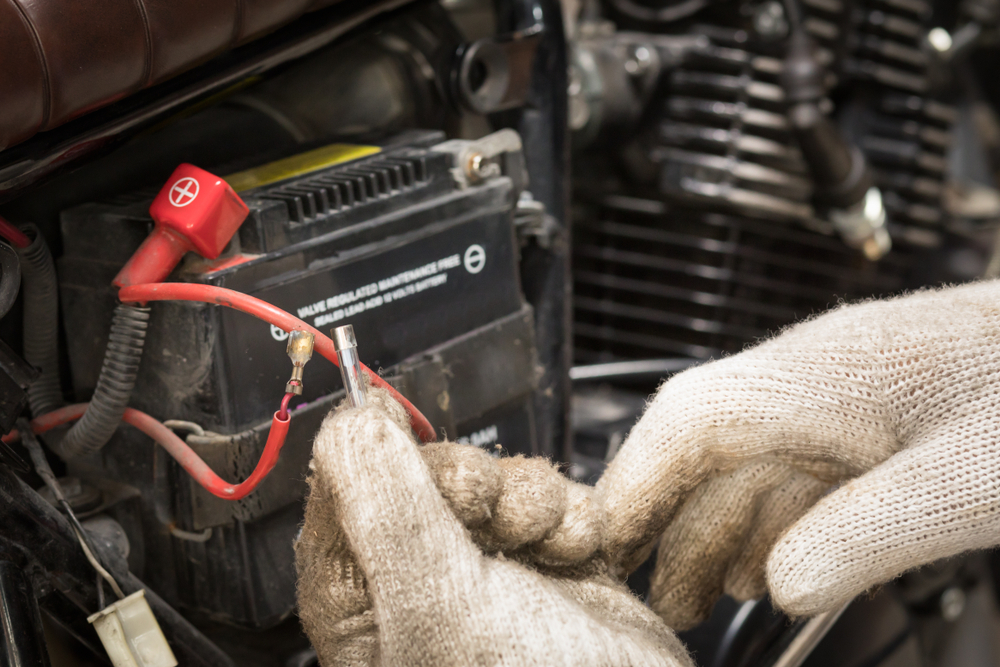
Complete bike battery replacement cost guide for Pune. Battery prices by brand and model, Exide vs Amaron comparison, signs of failing battery, doorstep replacement from ₹1,499.
Book our professional doorstep bike service in Pune now. Expert mechanics, genuine parts, affordable pricing.